How I work
Unposed, and I mean it
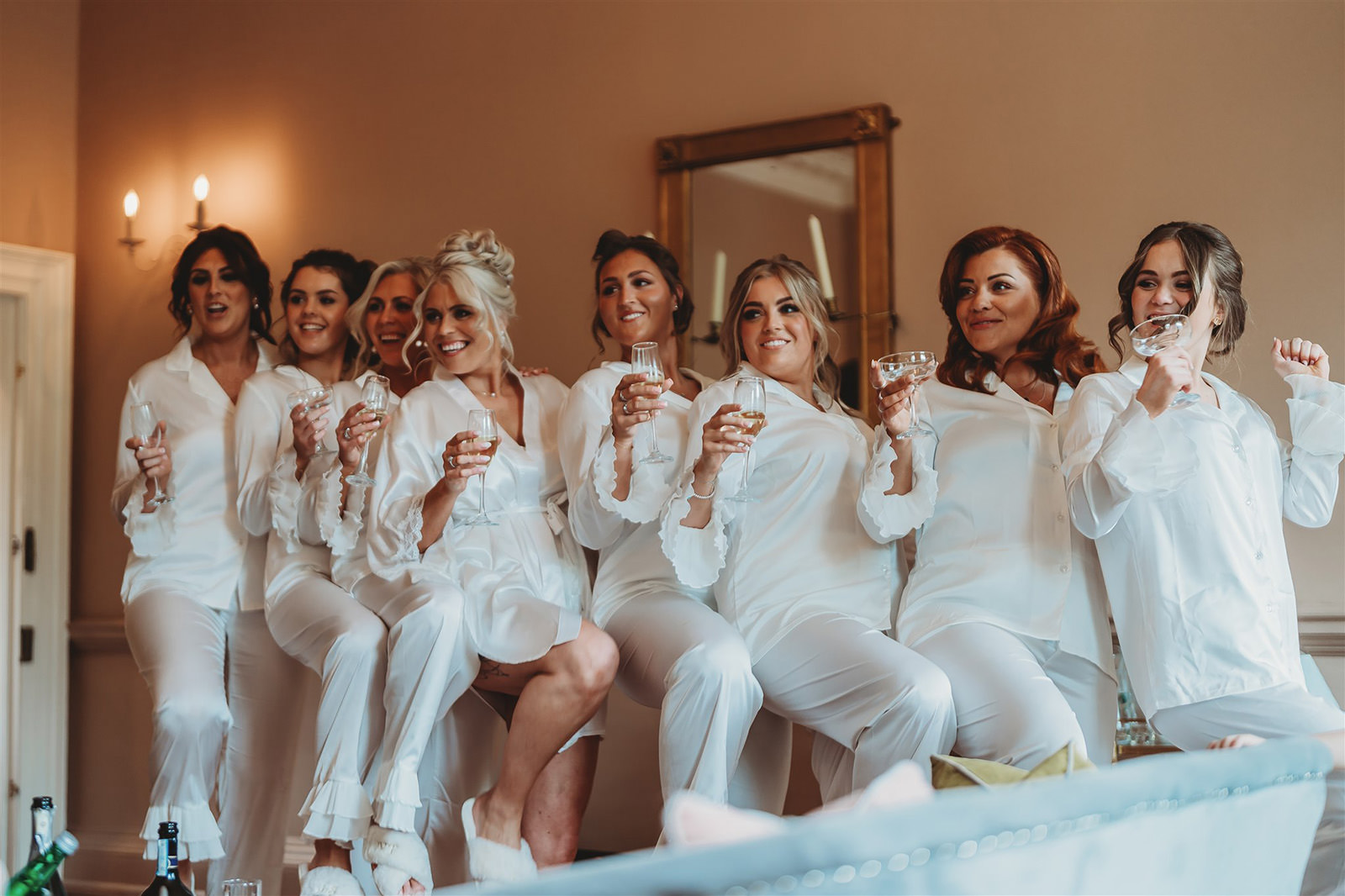
Almost every wedding photographer now says they shoot naturally. This page is what unposed wedding photography actually looks like when nobody is directing it — fourteen frames from eleven different weddings, and not one of them was set up.
What unposed wedding photography actually means
Almost every photographer in the country says they shoot naturally. Then on the day they move you into better light, ask you to walk back down the aisle again because they missed it, tell the make-up artist to hold still, and hand you a shot list at eight in the morning.
I do none of that. Not as a stylistic flourish — as the whole job.
It means I photograph what happens. If your dad cries during the speeches, there is a photograph of your dad crying during the speeches. If he doesn’t, there isn’t one, and I won’t manufacture it. The pictures you get back are a record rather than a performance, which is why in twenty years they will still be true.
There is a cost to working this way, and I would rather say it out loud: I cannot promise you a specific list of photographs. What I can promise is 987 weddings’ worth of knowing where to stand.
The morning, where unposed wedding photography earns its keep
I arrive about three hours before the ceremony and photograph both of you getting ready, wherever you are. This is the part of the day where unposed wedding photography pays for itself, because there is nothing here that can be staged later.
For the first twenty minutes I take almost nothing. I am working out where the light is coming from, which window is worth waiting by, who in the room is going to be interesting, and where I can stand without becoming part of the morning. Then I stop being noticeable.
Prep is the part couples are most nervous about and the part that produces the photographs they end up loving most, precisely because nobody in the room is thinking about a camera. Someone’s mum is fighting a zip. Someone’s sister is on her third coffee. A child has got hold of something they shouldn’t have.
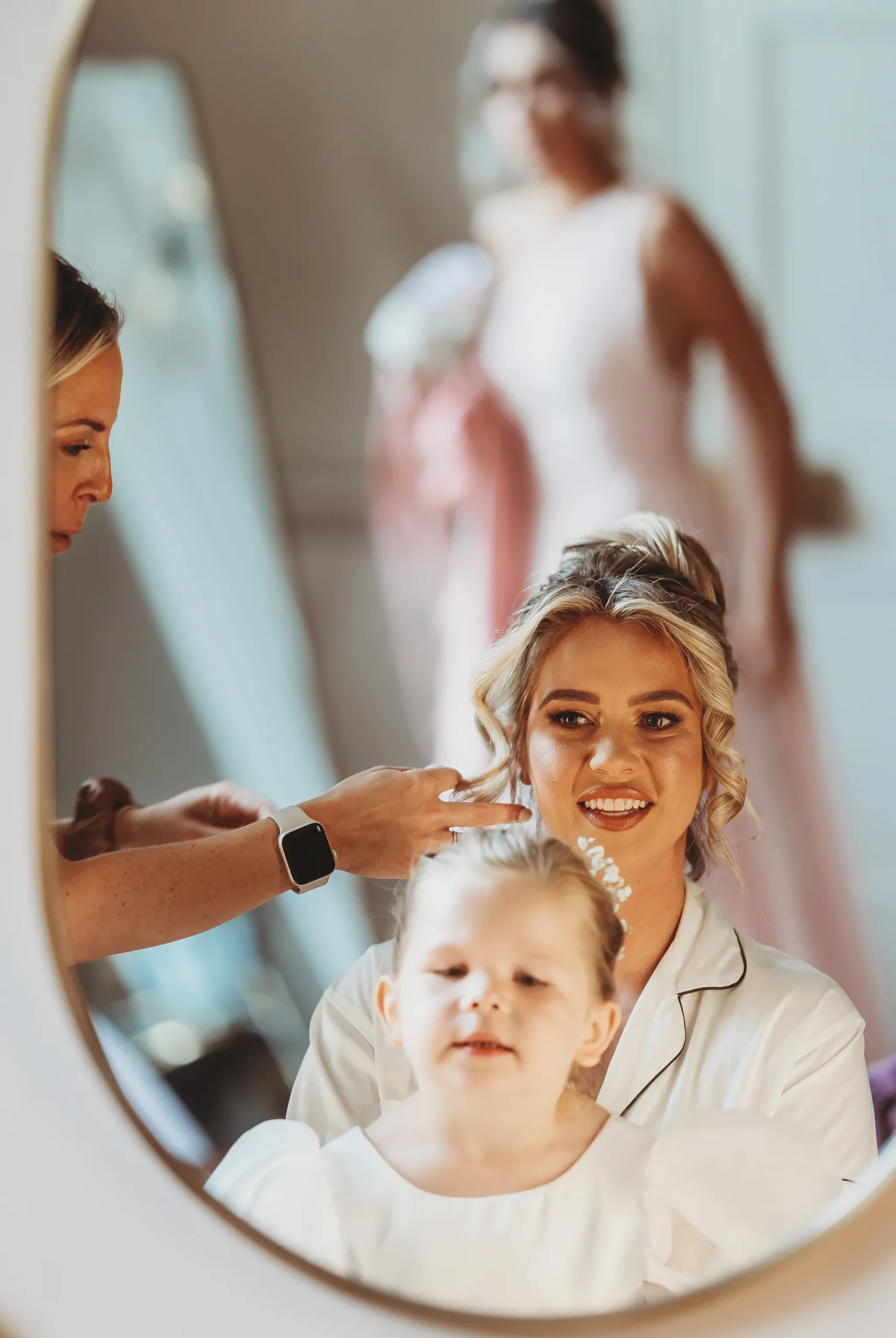
Taken into the mirror rather than at the room. Three people in one frame, and I was on the other side of it saying nothing.
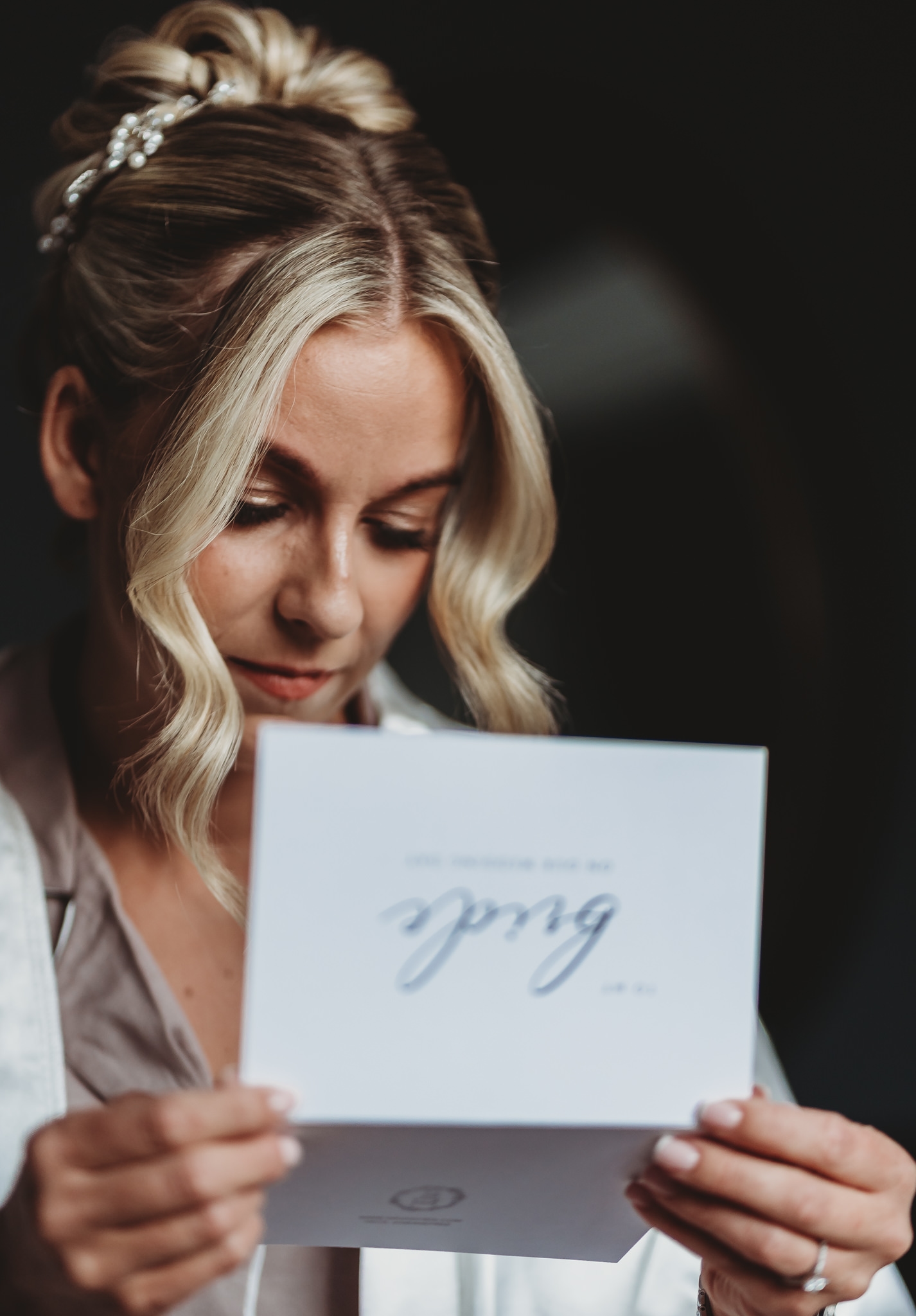
A card addressed to “Bride”, read quietly with her hair already done. I stayed where I was and let her have it.
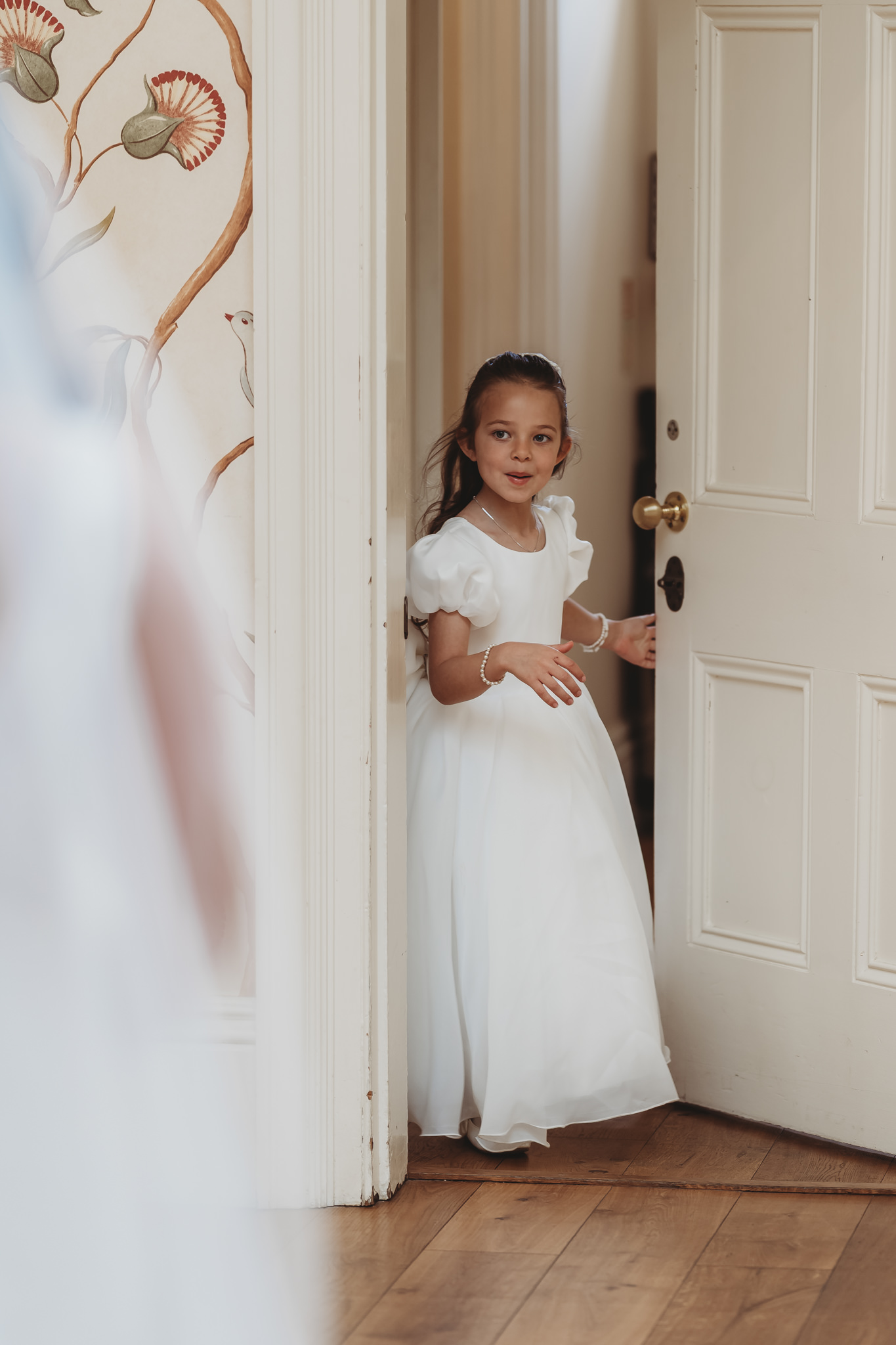
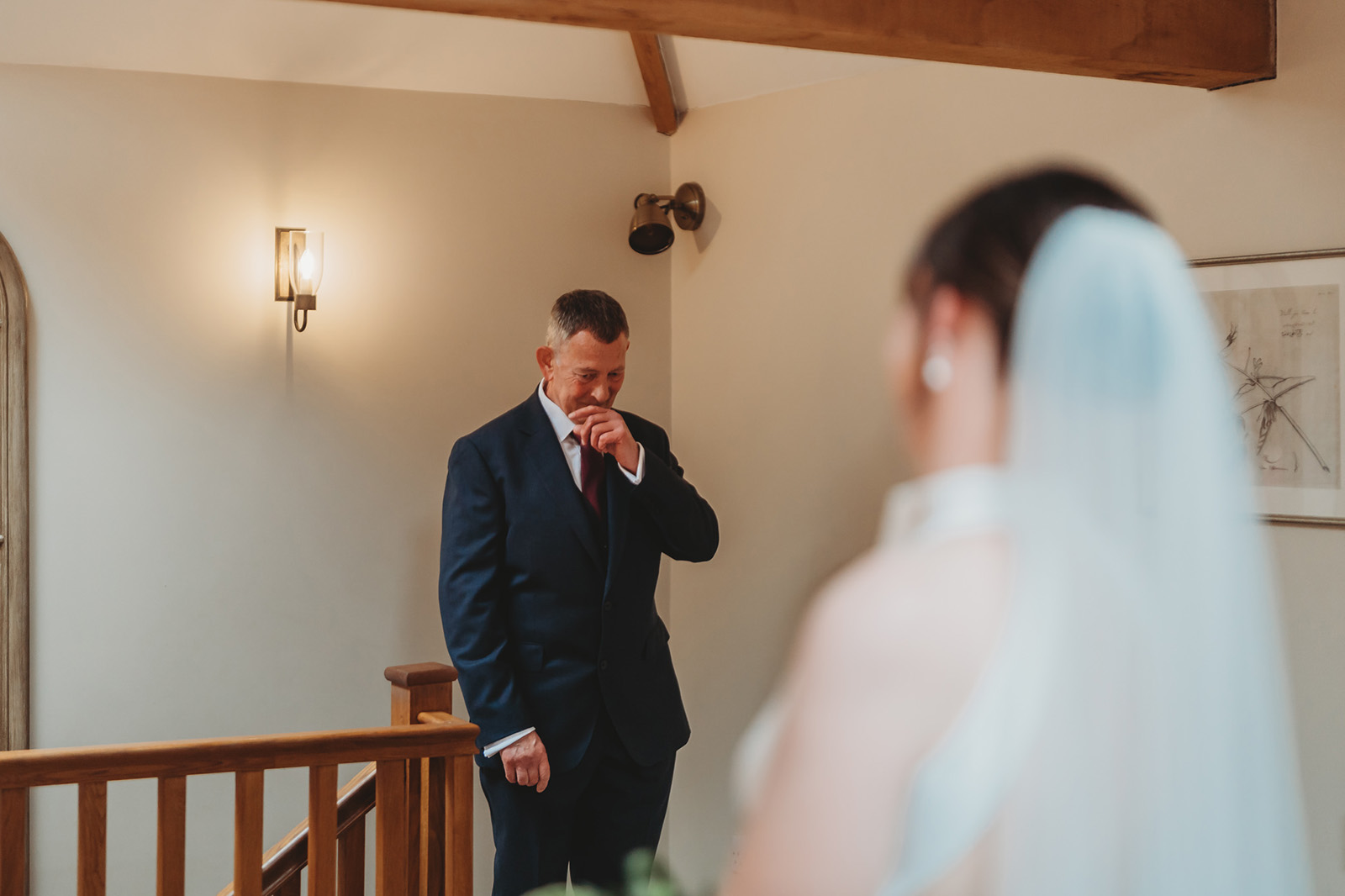
What I am doing while nothing appears to be happening
Most of my day looks like standing still. That is deliberate. Unposed wedding photography is a game of position, not reaction.
Unposed photography is almost entirely a problem of anticipation — being in the right place a beat early, with the right lens already on, having worked out the background in advance. If I have to move to get a photograph, I have usually lost it.
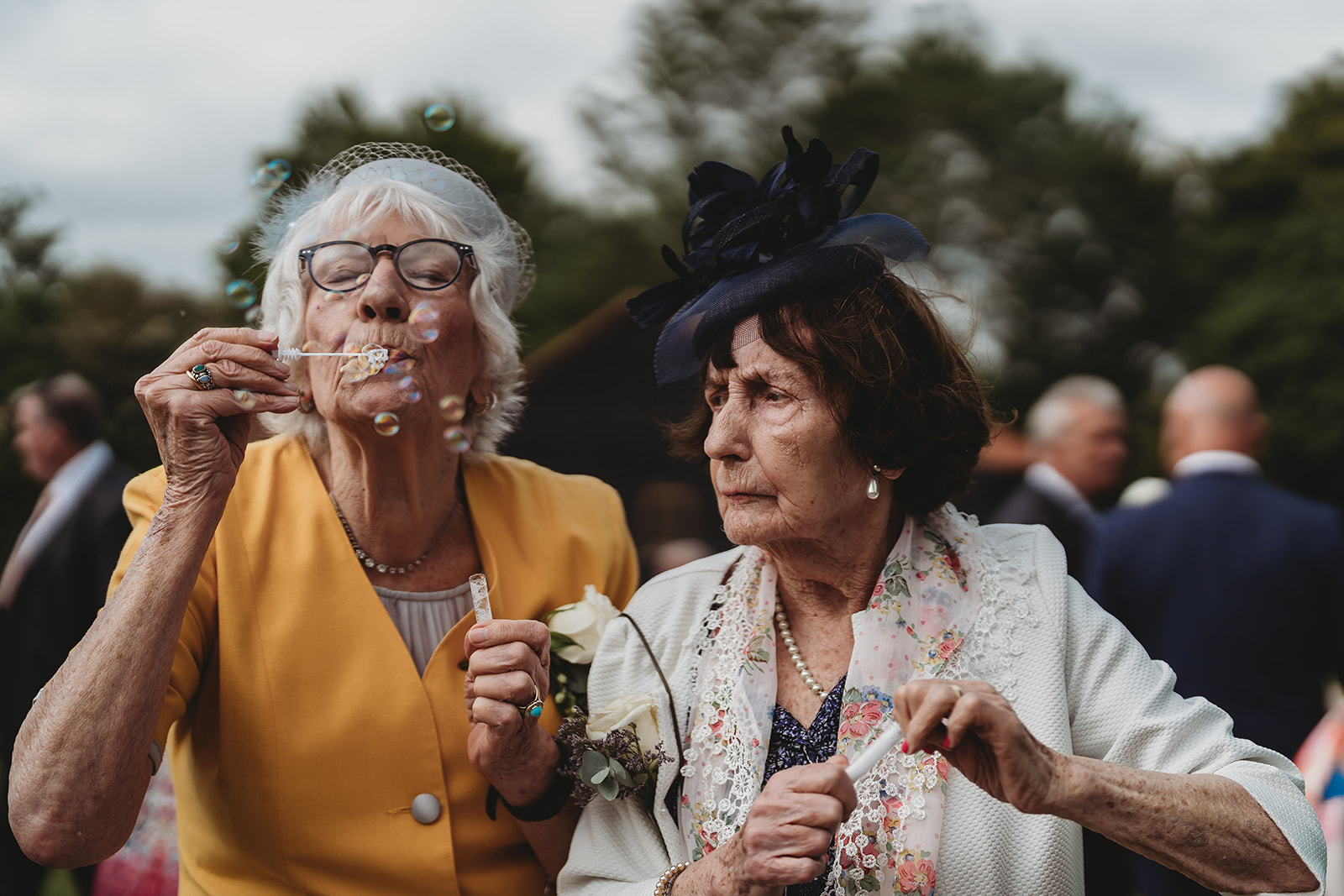
So I watch the edges of the room rather than the middle. The middle is where the obvious things happen and where everyone with a phone is already pointing. The edges are where a grandmother is quietly having a moment on her own, where two cousins who haven’t seen each other in four years are catching up on a bench, where the best man is silently panicking about his speech.
I also work with two bodies, silent shutters and a long lens for most of the day. That sounds like a technical detail and is really a courtesy: you should not be able to hear me working.
The ceremony
I shoot the ceremony from the sides and the back, quietly, and I photograph reactions at least as much as I photograph the two of you.
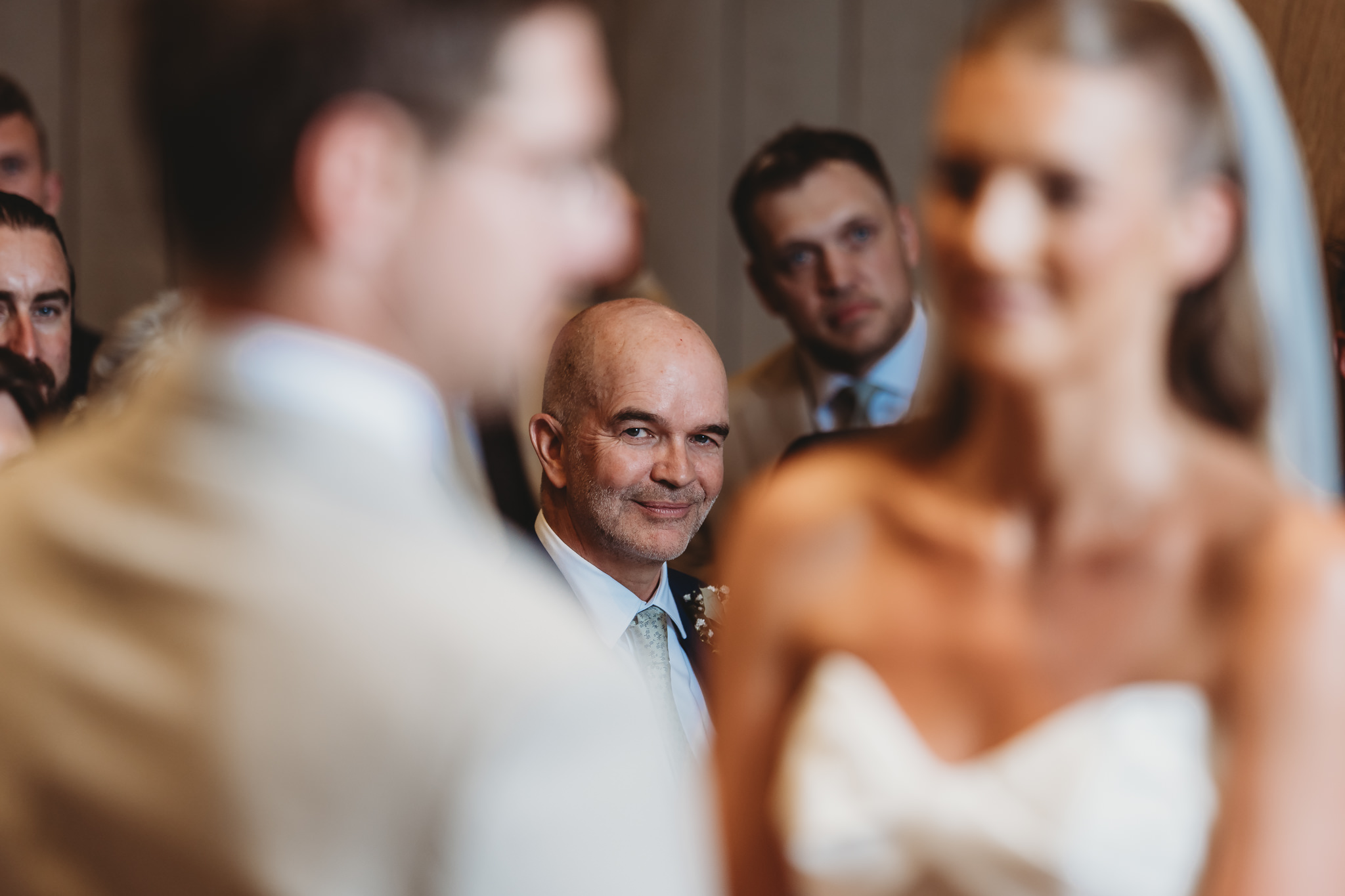
The vows are the emotional centre of the day and they last about four minutes. In those four minutes there are usually twenty photographs worth having, and only three or four of them are of the couple. The rest are your mother, your best friend, your brother trying very hard to hold it together, and a small child who has given up on the whole thing entirely.
I never ask anyone to repeat anything. If you want a photograph of the two of you coming back down the aisle, it exists because you walked back down the aisle once and I was already standing there.
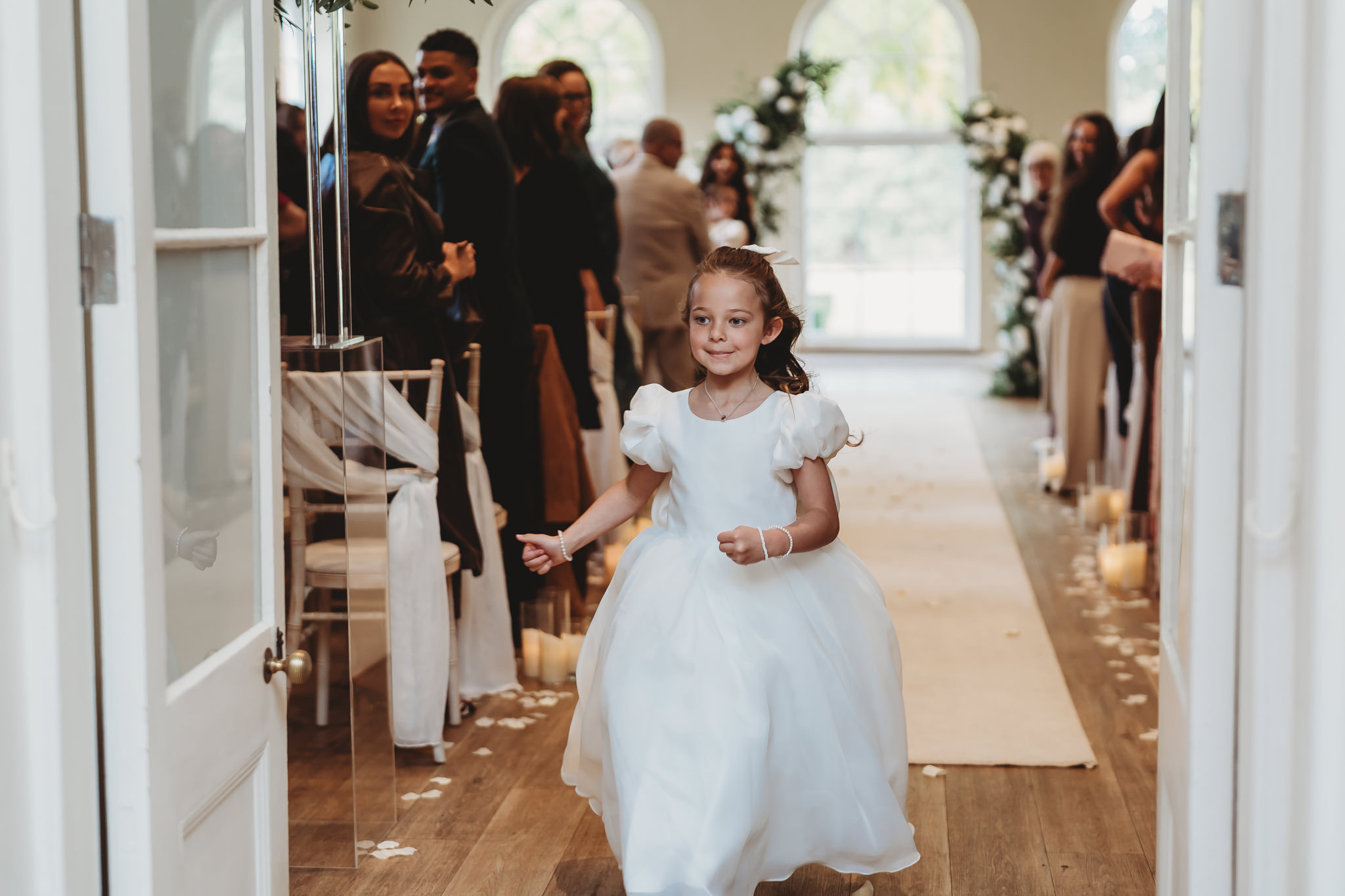
Down the aisle at her own pace, with the whole room watching.

A different wedding, shot from the back over the guests’ heads. I do not need to be at the front to get the front.
Confetti, the one bit I do organise
There is exactly one moment in the day where I take charge, and this is it, because confetti is over in eight seconds and it is very easy to waste.
I ask your ushers or the venue to put people in two lines rather than a ring, tell everyone to hold until you are properly into the gap, and ask you to walk it slowly and not look at me. That is the extent of the direction. Then it happens once, properly, and we are done.

The only forty-five minutes I will ask you for
Three slots of fifteen minutes. That is the entire directed portion of your wedding day — the only part of unposed wedding photography that involves me asking you for anything.
The first is straight after the ceremony while your guests are being walked round to drinks, so you are not missed. The second is a few minutes before dinner is called, while the room settles. The third is at sunset, which is the best light of the day and the slot worth guarding when you build your timeline.
Fifteen minutes is enough, because I am not building set-ups. I am walking with you, talking to you, and photographing you from a distance while you talk to each other. Plenty of couples tell me afterwards it was the only quiet part of the day.
And if being photographed genuinely makes you uncomfortable, say so on the planning call and these three slots become a walk and a conversation with a long lens pointed at it. You will not be arranged. Nobody’s chin gets adjusted.
Group photographs, honestly
You can have them, and I will do them properly. Fifteen minutes, a list agreed in advance, done briskly, and then everybody goes back to their drink. Group shots are the one place unposed wedding photography and a wedding list have to meet in the middle.
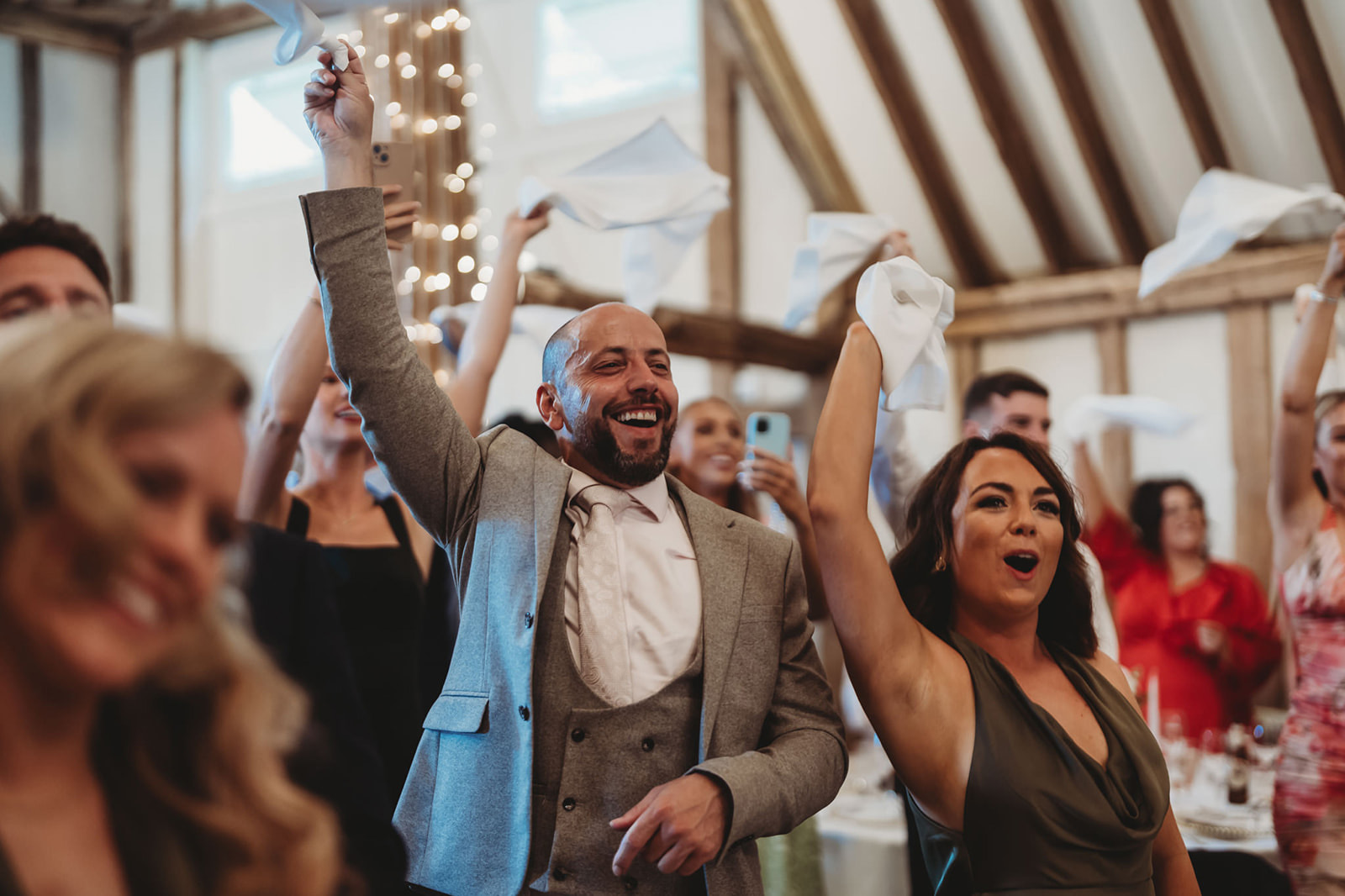
But I would say this: the formal groups are almost never the photographs couples end up putting on a wall. The photograph of everyone together that people actually keep tends to be the accidental one — the whole party leaning over a balcony, or the moment forty people react to the same thing at once.
Speeches
Speeches are the richest twenty minutes of the day for unposed wedding photography, and the reason is simple: nobody can leave, and everybody is reacting.
So I work the room rather than the top table. Half the frames I want are of the person listening rather than the person talking — and specifically the two or three people who are trying not to cry and failing.
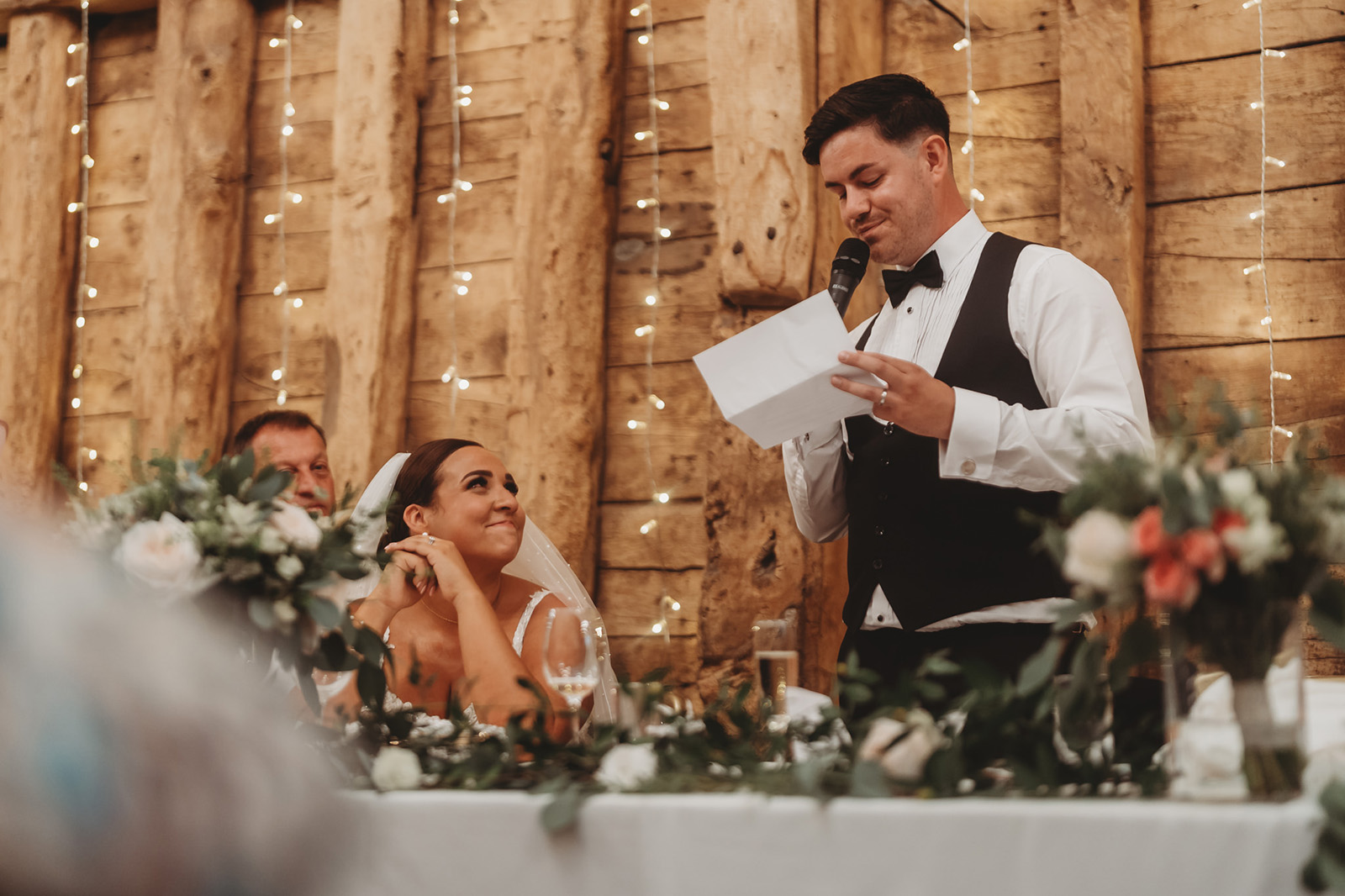
He is talking, and she is the photograph. That is why I work the room during speeches rather than the top table.
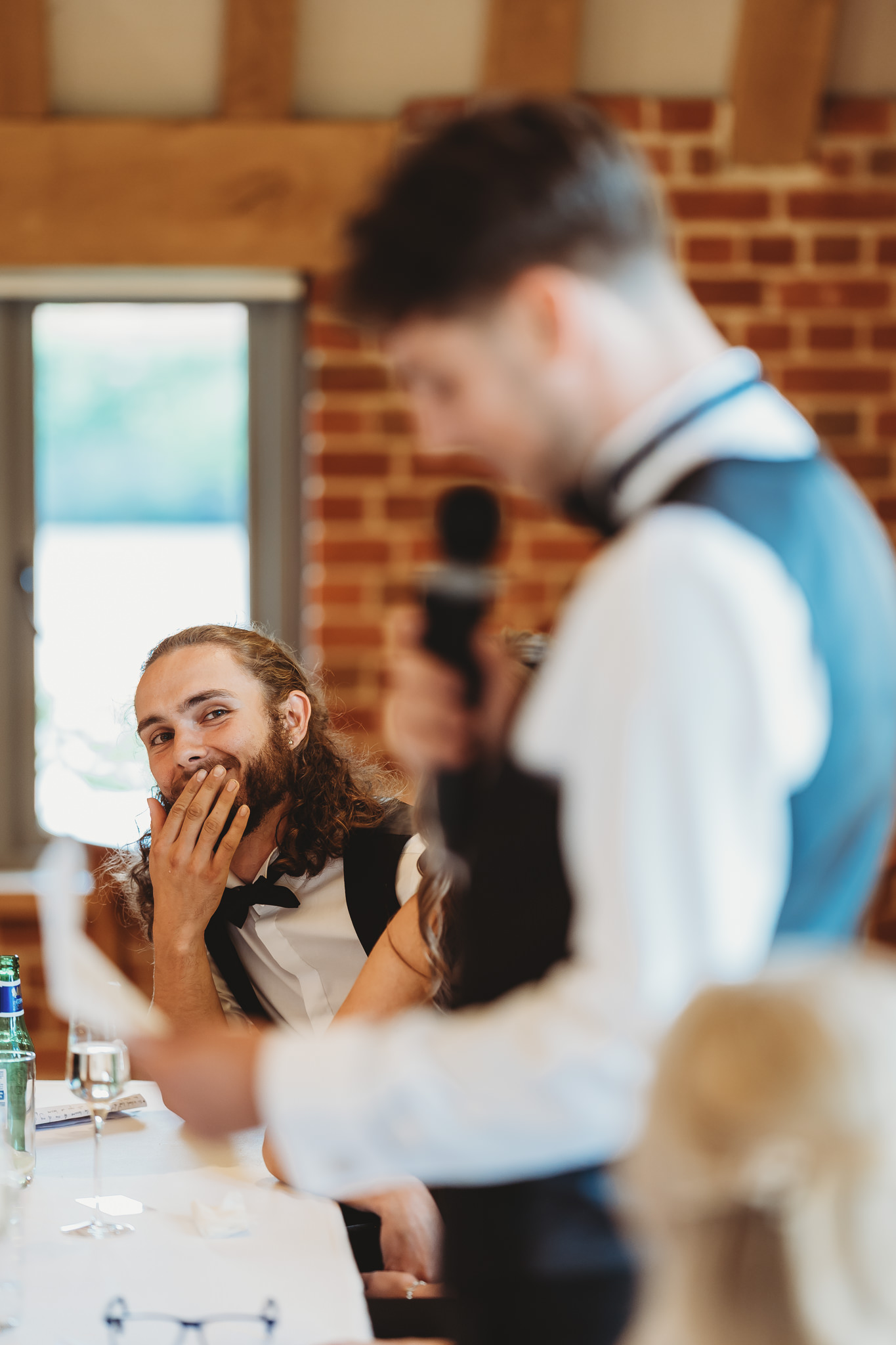
Same principle, another wedding. I am watching the person listening.
The evening, and why I don’t leave at the first dance
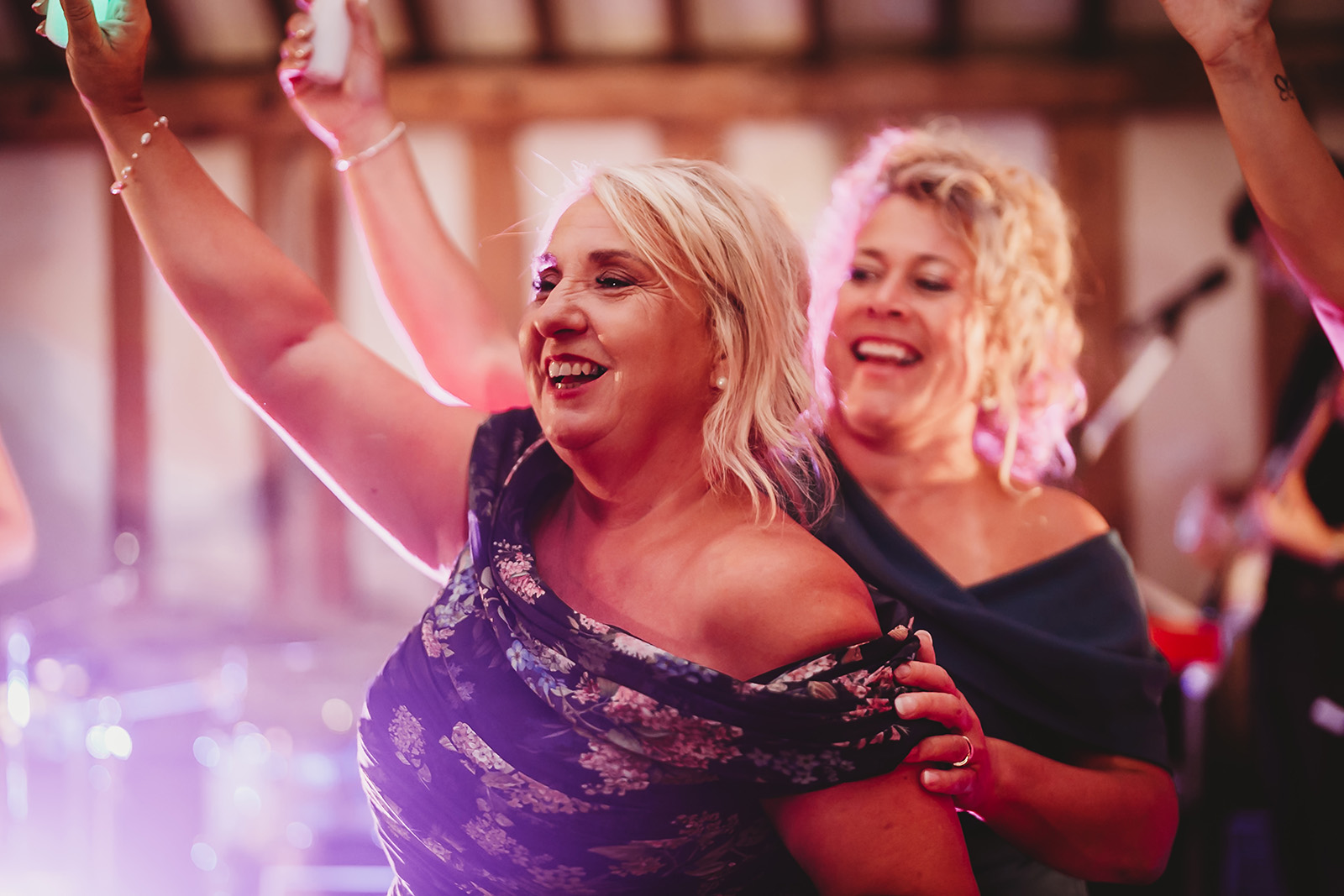
A lot of photographers finish at the first dance. It is a tidy place to stop and it saves two hours. It also cuts the most unguarded hour of the night out of the story.
It also means you have no photographs of the best hour of your own party. The first dance is a formality; what happens twenty minutes later, when the floor fills and the shoes come off, is the actual celebration. I stay until it is properly going, usually around 10pm, and I don’t charge for the overrun, because I don’t sell hours.
What I won’t do
Some of this is taste and some of it is a promise. Either way it is easier if you know before you enquire.
- Put your rings on a piano, inside a flower, or on a page of your ceremony script.
- Ask your father to shake your husband’s hand a second time so I can get it properly.
- Lay your bouquet on the floor and shoot past it with the two of you out of focus behind.
- Stand you thirty feet apart on a lawn on the day you got married.
- Ask the make-up artist to freeze, or hold up your morning to photograph a dress on a hanger in better light.
- Take you away from your guests for an hour and a half.
- Hand you a shot list — and I would gently suggest being wary of anyone who wants one.
If you are dreading the camera
Plenty of people are. It is by far the most common thing couples admit to me on the planning call, usually apologetically, and it is completely normal.
The honest answer is that unposed wedding photography is the easiest kind of wedding photography to be photographed by, because there is nothing to be good at. You are not being asked to perform, hold a smile, or do anything in particular with your hands. For roughly ninety-five per cent of the day you have no involvement in the photography whatsoever, and for the other forty-five minutes you are walking about talking to the person you have just married.
The line that comes up most often in my Google reviews is some version of we barely realised he was there. That is not modesty. It is the deliverable.
After the day
Every wedding gets ten to twelve hours of editing from me personally. Nothing is outsourced and nothing is bulk-processed through a preset.
I colour correct every frame so skin tones are right and the set is consistent, crop for composition rather than to a template, and take out the things that ruin an otherwise good photograph — fire exits, wheelie bins, a stray sign on a wall. What I don’t do is change what happened. Nobody gets slimmed, nobody gets moved, and no guest who wasn’t there turns up later.
Your gallery is hosted on Pic-Time, password protected, downloadable in full, and your guests can order prints from it directly.
You get over 100 edited previews the morning after the wedding, and the full gallery of 800 or more within sixteen weeks, usually sooner. All of it is included in the £2,500 price — unposed wedding photography is not an add-on here, it is the only thing I sell.
Straight answers
Roughly, yes — they are all describing the same intention. The words matter far less than what a photographer actually does on the day, which is why the honest test is to ask what they will be directing, and then to look at whether their galleries contain any guests.
Group shots, if you want them, and only if you want them. Everything else across the day is unposed.
Then say so and you will get it. Some couples genuinely want it and there is nothing wrong with that — I would just rather you chose it than had it handed to you.
Yes. Silent, fast cameras and no flash means I am not dependent on ideal conditions, and some of the best frames on this website were taken in weather nobody wanted.
The portfolio is the short version and the reviews are the honest one. There is also a destination page if you are getting married abroad.
Send me your date. A free planning call with no obligation, and £500 holds it.
Tell me your date
If unposed wedding photography sounds like the way you would want your day recorded, I would like to hear about it.